Why Printed T-Shirts in LA Still Dominate Street Style and Branding
Los Angeles has always had a complicated relationship with fashion. On one hand, you have the red carpet glamour of Hollywood. On the other, you have the everyday reality of life in a sprawling city where the car is king and the weather rarely demands more than a light jacket. In that gap, the t-shirt has become a kind of uniform. It is the canvas that carries a band name, a brand logo, a political message, or a piece of art. And for anyone who wants to make a statement without saying a word, printed t-shirts in LA are the default medium.
I have spent the better part of a decade working with print shops across the city, from the big production houses in Vernon to the small family-run operations in Eagle Rock and Glendale. What I have learned is that the market for custom shirts here is not just about putting ink on fabric. It is about speed, style, and understanding that a shirt needs to look good after ten washes, not just on the day it is picked up. That is where the real skill lives.
Why LA Is Different from Other Print Markets
Every city has its own rhythm when it comes to apparel. In New York, the demand tends to be driven by fashion labels and Broadway merchandising. In Nashville, it is all about music tourism. LA is something else entirely. Here, printed t-shirts in LA serve three distinct and overlapping crowds: the streetwear brands that launch every season from a garage, the small businesses that need uniforms and promo gear, and the entertainment industry that needs shirts for film crews, cast gifts, and tour merchandise.
The streetwear scene alone keeps dozens of print shops busy year round. The cycle is fast. A designer comes in with a sketch on Monday, wants a proof by Tuesday, and needs 200 shirts by Friday. That kind of turnaround is normal here. It forces a shop to be efficient, but it also forces the customer to understand what works on a shirt versus what looks good on a screen. I have seen designs that are stunning on a monitor and muddy on a white tee. The good shops will tell you that upfront.
The Real Cost of Cheap Printing
There is no shortage of online print-on-demand services that promise low prices and fast shipping. And for some situations, they are fine. But if you are ordering for a brand launch, a team uniform, or a wedding party, the difference between a cheap transfer and a proper screen print is the difference between a shirt that looks like a souvenir and one that looks like a product.
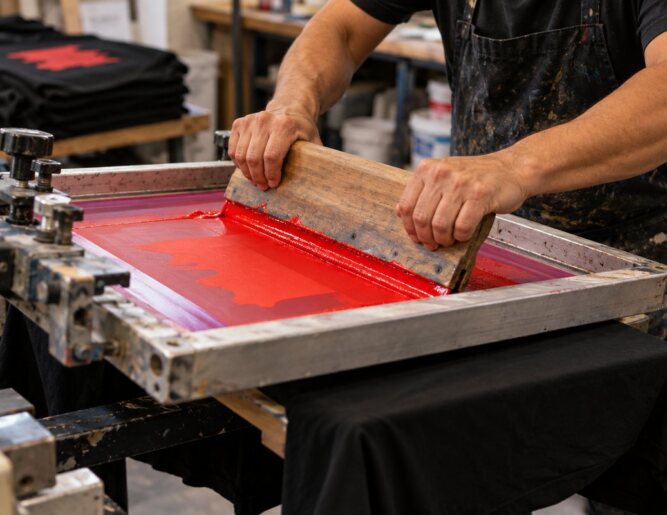
I once worked with a local coffee roaster who ordered 500 shirts from a discount website. The price was unbeatable. The shirts arrived with the print already cracking after the first wash. They had to reorder from a local shop, pay for rush production, and throw away the first batch. That is not a rare story. It happens constantly. When you pay for printed t-shirts in LA from a shop that does the work in-house, you are paying for the expertise that keeps the print on the shirt for years, not weeks.
Screen Printing vs. DTF vs. Embroidery
Most people come in knowing they want a t-shirt but not knowing how they want it made. That is normal. The three main methods in LA right now are screen printing, direct-to-film (DTF) transfers, and embroidery. Each has its place.
Screen printing is still the gold standard for large runs. If you need 100 or more shirts with the same design in a few colors, screen printing gives you the best color saturation and the lowest per-unit cost. The setup takes time, but the print quality is unmatched. DTF transfers have become popular for smaller orders and for designs with many colors or photographic details. The print feels a bit thicker on the fabric, but the detail is excellent. Embroidery works best for hats, polos, and jackets, though it can also be done on t-shirt fronts if the design is simple.
A good shop will offer all three options and will not push you toward one just because it is easier for them. That is the difference between a sales pitch and real advice.
How to Choose a Design That Works
Design is where most projects go wrong. The biggest mistake I see is people trying to put too much on a shirt. A t-shirt is not a poster. You have about six square inches of prime visual real estate on the front, and maybe the full back if you are doing a back print. Trying to cram a logo, a slogan, a date, and a graphic into that space makes the shirt look busy and cheap.
Here are a few practical guidelines I have learned from watching good designs succeed and bad ones fail:
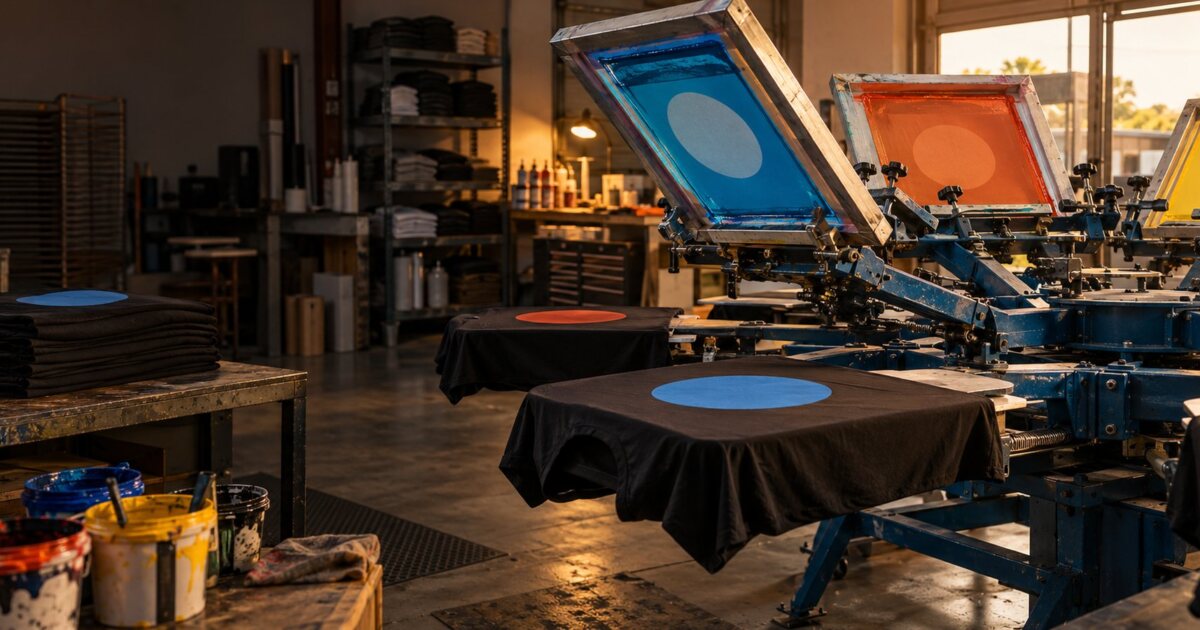
- Limit your ink colors to two or three. Every additional color adds cost and complexity. A two-color design printed well looks more professional than a six-color design printed poorly.
- Keep the font readable from a few feet away. Script fonts and thin lines look elegant on screen but turn into smudges on fabric.
- Think about the shirt color. A design that pops on a white shirt might disappear on a black one. Always check your mockup against the actual shirt color you plan to use.
- Leave room for the tag and the care label. Sounds obvious, but many first-time orders place the design too low or too close to the collar.
Fabric Quality Matters More Than You Think
The print is only half the equation. The shirt itself determines how the final product feels, fits, and lasts. Most LA print shops stock a range of blanks, from budget ringspun cotton to high-end tri-blends. The budget shirts are fine for giveaways or one-time events. For anything you want people to wear repeatedly, spend the extra few dollars per shirt on a heavier weight cotton or a cotton-poly blend that holds its shape.
I have seen a beautiful four-color screen print on a cheap shirt that stretched and warped after two washes. The print was fine, but the shirt was ruined. Conversely, a simple one-color print on a high-quality tee can look like a premium product. The shirt is the foundation. Do not save money on the foundation.
Working with a Local Shop vs. Going Online
There is a reason that local print shops in LA still thrive despite the rise of online giants. It is the same reason people still go to a tailor instead of buying off the rack. A local shop can look at your design, touch your fabric, and tell you what will work. They can catch problems before you place a final order. They can also handle last-minute changes and rush orders in a way that a faceless website cannot.
Custom Shirt Printing printed t-shirts in LA for a range of clients, from musicians to real estate agents. What sets a family-owned shop apart is that the person who answers the phone is the same person who will check the final print before it ships. That accountability matters. When something does go wrong, and it occasionally does, you are dealing with a human being who wants to fix it, not a ticket system.
I have seen the difference firsthand. A few months ago, a local band came in with a design that had a gradient background. The screen printer took one look and suggested they switch to DTF for that specific job because the gradient would not hold up in a screen print with the shirt color they wanted. That kind of honest advice saves money and disappointment. You do not get that from an order form on a website.
The Bottom Line for Anyone Ordering Shirts
Whether you are launching a clothing line, outfitting a staff, or making shirts for a reunion, the process comes down to three things: design, method, and fabric. Nail those three, and the shirt will do its job. Miss any one of them, and the result will fall short.

Custom Shirt Printing printed t-shirts in LA as a core part of its service, and the reason they do it well is that they handle every step in-house. The design help is free because they know that a better design means a better shirt, which means a happier customer. The production is done in their own facility, not outsourced to a third party. That control is what allows them to turn around a rush order in a couple of days when another shop would quote two weeks.
If you are reading this and thinking about ordering shirts, take the time to visit a local shop. Bring your design, or bring just an idea. Talk to the people who will actually print your shirts. Ask to see samples. Feel the fabric. That is how you end up with a shirt you are proud to wear or hand out. And in a city where image matters as much as it does in LA, that is worth the extra effort.
 Facebook
 Instagram